• Explore Categories
    • Living Planet
    • People & Patterns
    • Natural Wonders
    • Odds & Ends
    • Behind the Map
Subscribe
Search Form
No Result
View More Search Results

Touring Earth’s Tallest Mountains

by Robby Deming
August 18, 2025
Natural Wonders

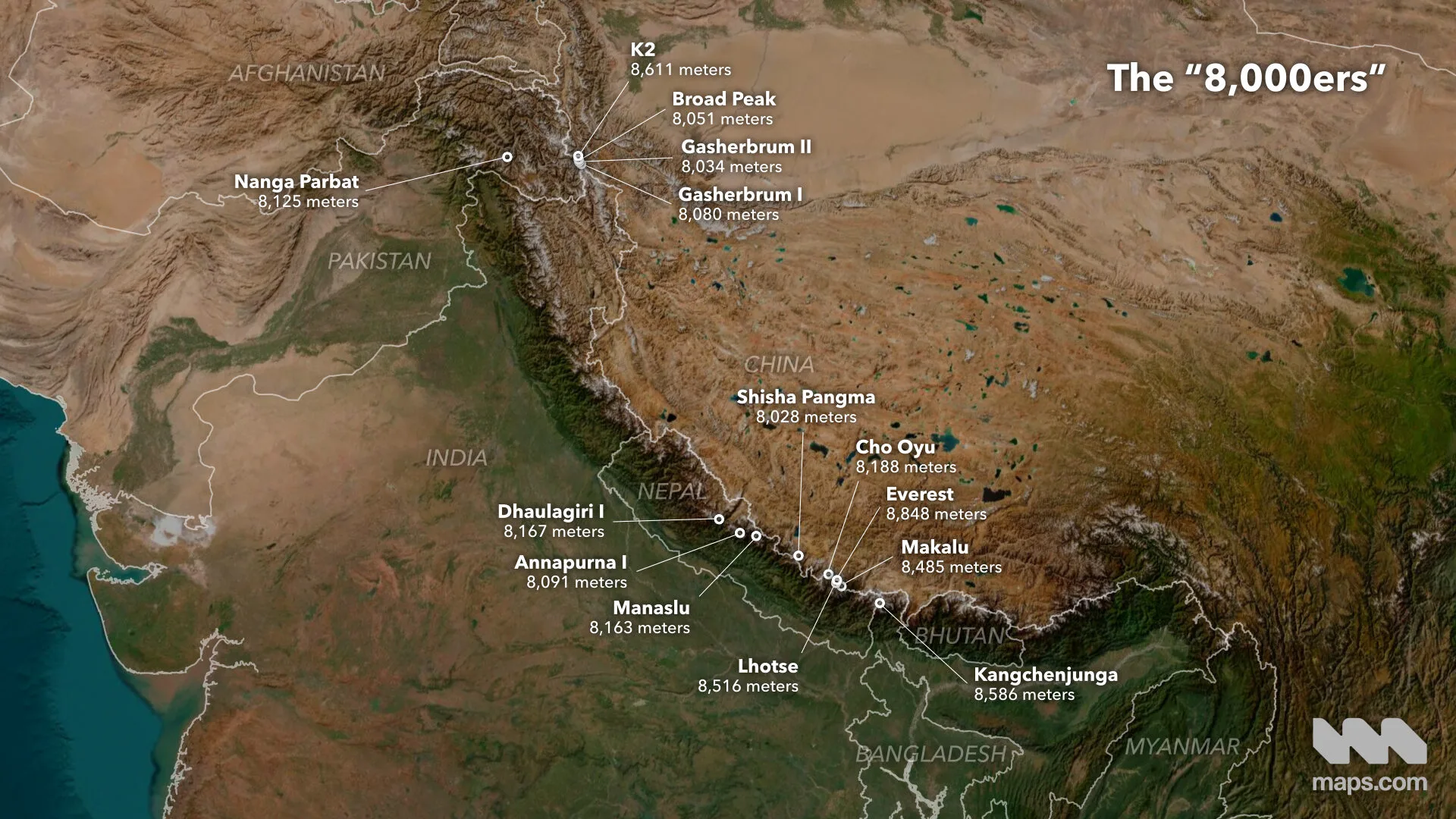
Mount Everest, known as Sagarmatha in Nepal and Qomolangma in Tibet, has long been a target for thrill seekers, climbers, and adventurers. Climbing Earth’s tallest mountain can be a dangerous expedition, as it’s claimed the lives of more than 200 people. Although Everest gets most of the attention, it’s not the only mountain in the region that climbers covet. The most daring and adventurous climbers aim for the “8000ers,” a group of 14 different mountain peaks taller than 8,000 meters. Fewer than 100 people have managed to summit all 14 peaks.

This animated map tours the 8000ers, showing their locations and unique topography. It relies on data from 8000ers.com, as well as NASADEM elevation data and imagery curated by Esri to bring the peaks to life.

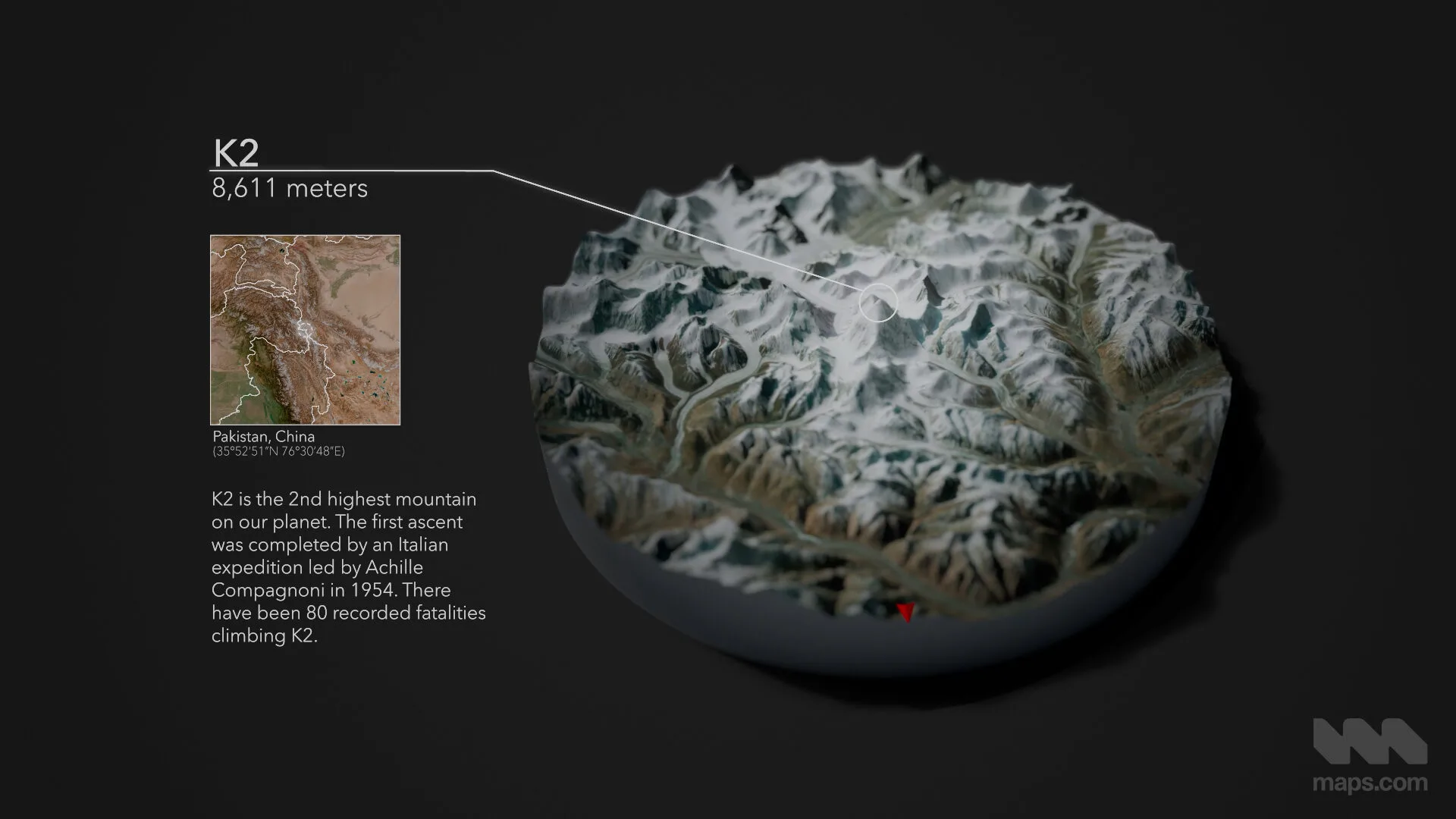
Diorama of K2 and surrounding area.
Explore a rotating diorama highlighting the topography and terrain of each of the 14 mountains. (Source: Maps.com)

Each peak is animated as a 3D, 360-degree diorama. Ordered from the shortest (Shisha Pangma, at 8,027 meters or 26,335 feet) to the tallest (Everest, at 8,848 meters, or 29,029 feet), the dioramas showcase the unique topography of each mountain. You can see snow and ice, glaciers, alpine lakes, vegetation, and rocky terrain. There’s a surprising amount of diversity in shape and land cover across the two ranges where the 8000ers can be found. You can also get a sense of the geological processes that shaped each area. A red arrow on each diorama helps to orient viewers by indicating north. 

The dioramas also include information about each peak. Besides name and height, the map lists the coordinates and countries where each mountain is located. You can also discover who first summited each mountain and when, as well as the number of fatalities recorded on each peak. While Everest has seen the most fatalities, Nanga Parbat and K2 have also claimed 80 or more lives.

Article ers wireframe updated
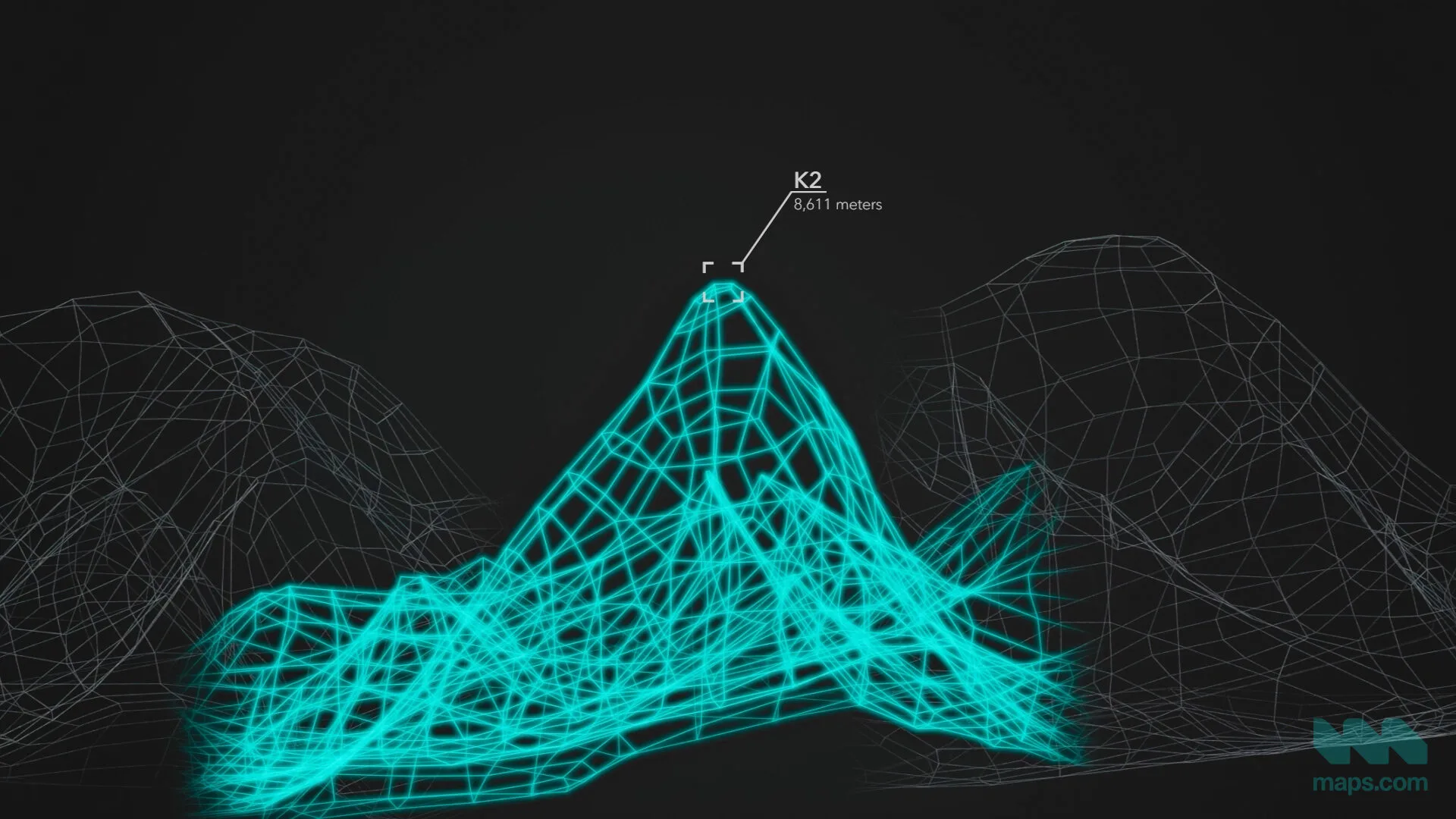
Compare each peak’s shape and relative height, from shortest to tallest. (Source: Maps.com)

The video ends with stylized wireframes comparing each mountain’s shape and height. They reveal the scale of these towering mountains, as well as the varied topography climbers face. 

Most of us will never climb one, let alone all 14 of the 8000ers. But this animated map highlights the immense challenges and soaring heights for those who do.

Map showing location of 8000ers mountain peaks
The 8000ers cluster in the Karakoram range in the north and the Himalayas in the south. (Source: Maps.com)
More to Explore

  • Discover how snowpack in the Himalayas has changed since 2000.
  • Tour the mountains of Lake District National Park in northern England.
  • Get a new perspective on avalanche risk in the Alps.

About This Map

Title
Tour the 8,000-Meter Peaks
Creator
Charlie Lott and Rich Spencer, Maps.com
Data Sources
  • 8000ers.com
  • NASA Earthdata
  • Esri
Original Map

This original map was created by the Maps.com team. It is available for you to use in accordance with our media use policy.

Tags
Animated Maps Explainer Geology Imagery Original Snow
Share This Article

Keep Exploring

Smith english fells featured

The Peaks and Prominences of England’s Lake District

December 2, 2024
Natural Wonders
Explainer Geology Interactive
A rendering of Earth's continents as they might have been during the Devonian period, 400 million years ago.

Peer into Earth’s Ancient Past

January 3, 2024
Living Planet
Geology Historical Interfaces
Carbon dioxide in the atmosphere, concentrating over the northern hemisphere and areas of human population.

Watch a Year in the Life of Earth’s Carbon Dioxide

July 8, 2024
Living Planet
Air Quality Animated Maps Climate Change
View More Maps
Next Post
There is no such thing as a right side up map.

This Map Is Not Upside Down

August 18, 2025 Odds & Ends

Maps.com
Explore Today.
Create Tomorrow.
  • About Maps.com
  • Submit a Map
  • Contact
  • Legal
  • Privacy
  • Media Use
  • Manage Cookies
  • Do Not Share My Personal Information
  • Legal
  • Privacy
  • Media Use
  • Manage Cookies
  • Do Not Share My Personal Information
  • Categories
    • Living Planet
    • People & Patterns
    • Natural Wonders
    • Odds & Ends
    • Behind the Map
  • About
  • Submit Map
  • Contact Us
Subscribe

  • Legal
  • Privacy
  • Media Use
  • Manage Cookies
  • Do Not Share My Personal Information

Add New Playlist

  • Categories
    • Living Planet
    • People & Patterns
    • Natural Wonders
    • Odds & Ends
    • Behind the Map
  • About
  • Submit Map
  • Contact Us
Subscribe

  • Legal
  • Privacy
  • Media Use
  • Manage Cookies
  • Do Not Share My Personal Information

Thank you!

We have received your request and will send updates about Maps.com to your email:

Continue reading article

Sign Up For Updates

Skip to content